Wednesday, June 08, 2005
Weekday Update
1) The Illuminatus Trilogy by Robert Anton Wilson et. al.
2) The Image and other stories by Isaac Bashevis Singer
3) The Magician of Lublin by Isaac Bashevis Singer
4) Love in the Time of Cholera by Marquez
5) Dune by Frank Herbert
6) Maps in a Mirror, by Orson Scott Card
7) The Crying of Lot 49 by Thomas Pynchon
8) Winning Low-Limit Hold'em by Lee Jones
9) The Unbearable Lightness of Being my Milan Kundera
I recommend all of these, though most are appropriate only for specific audiences.
Some random thoughts on academia, from an aspiring (cough) academic:
1) Academics really don't work hard, unless they choose to, and even the ones that choose to work hard work much less than similarly skilled professionals in the field.
2) That's what's great about academia, and there's nothing wrong with that. Society likes smart people to have a second to think, and (some) smart people care more about that free time than they do about the higher pay in industry.
3) Academic jobs in fields which pay extraordinarily well in industry (law,business, medicine, and once upon a time CS) are really sweet jobs. I may want to do this one day. You get paid a fraction of what your colleagues in industry earn, but three times what your colleagues who teach sociology earn, and you don't really work much harder. The anecdotal evidence I've heard suggests it's easier getting these jobs than other jobs in academia (at least in business). The downside is, well, the money, and grad school.
Monday, June 06, 2005
Intelligent Diseased Ashkenazim
Friday, June 03, 2005
on Finishing
I was feeling quite down until I ran into a prof I had once, a grad student in the Math dept. I told him graduation was a sad occasion, he reminded me that never graduating is even sadder--an all too common occurrence in the grad school. I realized it is not so bad, it could be worse.
As I finished my last exam (after taking a train back from StL at 4:30a) I handed it in to Dean Boyer, received the standard congratulations and walked outside. My friend had called to say she was busy and could not go to see the Phantom Tollbooth so I walked to see the movie, alone, in the drizzle. Dramatically ironic, I thought.
Thursday, June 02, 2005
Sylvia Plath - Mad Girl's Love Song
I shut my eyes and all the world drops dead;
I lift my lids and all is born again.
(I think I made you up inside my head.)
The stars go waltzing out in blue and red,
And arbitrary blackness gallops in:
I shut my eyes and all the world drops dead.
I dreamed that you bewitched me into bed
And sung me moon-struck, kissed me quite insane.
(I think I made you up inside my head.)
God topples from the sky, hell's fires fade:
Exit seraphim and Satan's men:
I shut my eyes and all the world drops dead.
I fancied you'd return the way you said,
But I grow old and I forget your name.
(I think I made you up inside my head.)
I should have loved a thunderbird instead;
At least when spring comes they roar back again.
I shut my eyes and all the world drops dead.
(I think I made you up inside my head.)
Prisoner Release
There are some indications that the Israeli prisons may not live up to their reputation. According to the Jerusalem Post,
Although initially 400 prisoners were meant to be released, at the last minute, two decided to remain in prison – one because he wished to complete the bagrut (matriculation exam) and the second because he wished to stay with his brother who was still completing his term.While 398 did actually leave, the fact that 2 stayed really shows the humanity of the Israeli prison system. I've never heard of this happening in the United States, nor in the Russian Gulag.
Tuesday, May 31, 2005
My God, Your God, Our God?
Tonight, I had the pleasure of dining at the Brackman's and listening to an Alum (turned Chabad) and his wife (also turned) talk about their religious experience. The wife spoke of being an executive with a record label, only to find that the Rebbe would show her a path away from her job and towards her beshert [husband]. (This happens bederech hateva [in the normal course of things], of course, when she does not get the promotion) I am not slighting her religious odyssey, but rather find myself puzzling over why some peoples journey takes them towards emunah [faith] and others away. Are we (ehm, I) just not looking for God? Does He play games (i.e. challenge us)? And on what grounds is this the same God? Obviously, as a monotheist, there is only one God, but what does that mean to say that our conceptions vary so distinctly?
Why would you want to be an academic?
UPDATE. I implied that feminist women are more concerned with status than non-feminist women. Seeing as how I say that only based on my own thought and experience and not systematic research of any sort, I feel I should limit that suggestion to Orthodox feminist women, a group I at least have a little more knowledge of.
Sunday, May 29, 2005
Friday, May 27, 2005
UofC Gossip
1. Hutchins destroyed the University by building the RI with money from the Rockefeller endowment. This led to further dippings in to the account, which did not allow it to grow. Furthermore, the need to rehabilitate the neighborhood in the 50's sapped a lot of money that the University did not foresee. They got so depreate that they started admitting 15 years olds and giving BA's to 19 year olds in order to raise money from undergrad tuition. This then led to the utter devaluation of our undergraduate degree, to the point that no grad school would accept it. High-Schools were then withholding transcripts of bright high-school kids who wanted to apply here and enrollment dropped to below 1,500 for the entire college.
That's why Hutchins left, he was forced out by the board.
2. Admission is capped at 1,200 (per class) for the foreseeable future because the University cannot provide housing to more undergrads (and promises housing to all first years).
3. The new dorm is breaking ground June '06 and will be attempted to fit into the environment--no more orange brick. Hopefully something like the new GSB.
4. While the UofC does not look at the US News rankings they get a lot of angry calls from younger alums when our ranking drops. Make of that what you will
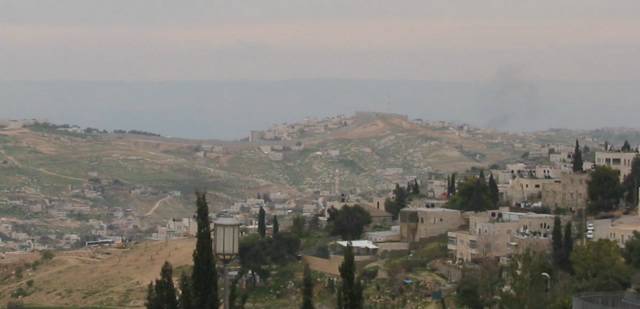
A Glimpse of Another Jerusalem
Yesterday, Sara and I went with a Druze friend of ours to Salah a'Din street in search of some Arabic literature. Sara and I have been to a number of small villages in the North of Israel in search of books, but I found my trip into
I only dog paddle...
Great moment of ever. I get into Abe's office this morning: "I read your paper, it was good... ... ... I mean it wasn't perfect, there were errors..."
I have never been so excited for the period of three elipsies in my whole life. He actually had to pause before he said something negative. It made my ever.
Monday, May 23, 2005
At last...
Friday, May 20, 2005
Silly Santorum
The day was filled with heated rhetoric. Republican Sen. Rick Santorum of Pennsylvania compared the Democratic protests over GOP moves to have judicial nominees confirmed to Adolph Hitler's seizing of Paris in 1942 and then saying, "I'm in Paris. How dare you invade me. How dare you bomb my city. It's mine."("Senators seeking a deal on judicial filibusters" Houston Chronicle 5/20)
To my knowledge, there have been a couple of wars aside from WWII. It is generally considered tactful to make analogies to those conflicts and skirt mentions of Hitler. Its a slippery slope from that to bad manners.
Thursday, May 19, 2005
The Real Senate Majority Party and Judicial Confirmation
1. Not all Democratic Senators support the filibuster. It makes sense to count their vote tallies on the other side. The Democratic Senators Nelson of Florida and Nebraska voted for cloture last Congress and switching (or merely removing) their vote totals gives the majority to the anti-filibuster side (Democratic Senators Breaux and Miller also voted for cloture but have since retired) . It remains to be seen whether Senator Salazar will vote for cloture.
2. There is a reason this Democratic argument has been heard only recently even though the filibusters have been going on for quite a while. After the 2002 election, when the filibusters began, the total GOP Senate vote was greater than the total Democratic Senate vote by this measure. If this measure should determine whether these nominees should be approved, they should have already been approved.
3. The votes would probably have come out differently if total Senate votes by party were seen as significant. After all, in the more democratic House and Presidential elections, the GOP racked up a majority of votes. The Democrats racked up landslide Senate victories in New York, Illinois, and California where the GOP did not put up serious opposition. If both parties and voters had felt the Democratic margin of victory in those states important, the margin would probably have been similar to that in the Presidential race. Of course this sort of thing can operate the other way as well. It just didn’t in 2004 to the nearly the same degree.
4. Since Senate elections are staggered, those Senate elections that take place in Presidential election years would be disproportionately represented in this measure. Adjusting for this point, though, would only reduce the Democratic margin, not erase it.
Wednesday, May 18, 2005
How to accept a Fast
2. Instert this somewhere in Shmone Essre:
הריני בתענית יחיד מחר. יהי רצון שתהא תפילתי ביום תענתי מקובלת
3. Instant Ta'anit!
Note: Rama says it is better to instert this after the Amida (as not to make a hefsek), but I remember being told to say it during Sh"E at Gush. One one of my friends forgot to insert this in his tefilah, R. Mordechi told him not to fast.
Supernote: Mishna Brura says on this in the Rama, "It's better after the tefilah: Like in the beginning of the section when is says: in "shomea tefilah" or "after he finishes his tefilah, etc." On this he [Rama] says it is better to add it in after the tefilah but before yehe ratzon."
שולחן ערוך תקסב:ו
Do you think?
on Translation (short)
Is kissing a women through a vail like eating a potato without salt? Apparently.
Monday, May 16, 2005
Burn him!
Scott writes:
This is by far the best film in the more recent trilogy, and also the best of the four episodes Mr. Lucas has directed. That's right (and my inner 11-year-old shudders as I type this): it's better than "Star Wars."That is just not true. Leaving aside for the moment that A New Hope was, in fact, the best of the trilogy--acting and writing were important to the first set of movies. Alec Guinness is an acting legend and Harrison Ford launched his impressive acting career through the movies. Not the mention James Earl Jones as Darth Vader, an awesome villain only since dreamt of by six year olds, who is an accomplished Academy Award winning, classically trained actor. No, Hamill was not of that caliber, but he did his job (particularly in episode IV). The screenplay for A New Hope has also produced many wonderful quotes, which the new movies have so poorly attempted to mimic. This nonsense that the first Star Wars were merely impressive light shows is patently false, and it really irks me that Scott so easily wipes away the first movie as such. Well, I will see this new movie (which I am glad to hear is better than the preceding two) on May 28 (when my probation ends) and will judge for myself. I have no fear, however, that eating crow will be even a remote possibility.
"Revenge of the Sith," which had its premiere here yesterday at the Cannes International Film Festival, ranks with "The Empire Strikes Back" (directed by Irvin Kershner in 1980) as the richest and most challenging movie in the cycle. It comes closer than any of the other episodes to realizing Mr. Lucas's frequently reiterated dream of bringing the combination of vigorous spectacle and mythic resonance he found in the films of Akira Kurosawa into American commercial cinema.
To be sure, some of the shortcomings of "Phantom Menace" ... are still in evidence, and Mr. Lucas's indifference to two fairly important aspects of moviemaking - acting and writing - is remarkable. ..
Anyway, nobody ever went to a "Star Wars" picture for the acting.
Roger Ebert (bless him) has more sane things to remark about the new movie. He too liked it, but had more substance than it was just good. He does lament the diolog admitting, "[t]o say that George Lucas cannot write a love scene is an understatement; greeting cards have expressed more passion." I found Ebert's comments on the role of special effects the most interesting part of his critique though. "[S]pecial effects should be judged not by their complexity but by the degree that they stimulate the imagination, and "Episode III" is distinguished not by how well the effects are done, but by how amazingly they are imagined." And here he claims ILM and Lucas do a fine job of creating a new reality for us. I guess I will be seeing this movie multiple times.
Regarding the Omer, Rav Yuter told me that one might be chayav to watch this movie as it is a tragedy, and would actually intensify the mourning of sfirah. How 'bout that for a heter?
Friday, May 13, 2005
אבדתי את תעודה הזהות שלי
The phone rings. You know, he might be at an azkara for his brother. Shalom, Juri, its Menachem, I guess your not home right now, so I will just leave a message. My students and I just wanted to say hi and wish you a good Yom HaZikaron. I will see you in three weeks, in any event. Bye.
Yes, ####, he does posture. But as he pointed out today, young people have no memories and are full of plans. Old people have no plans and are forced to retrieve memories. It is very sweet though. He also invited us to join their tiyul ever shabbat to the old city from Moshava HaGermanit. All the "boys" (one of them is Magen Broshi, but I forget the others. Brinker's pals--the Israel intelligentsia, quite literally) walk to the old city, tell stories and camp out eating at their favorite chumus stand. How rock awesome?
Now onto the Amichai poem I really liked...
אבדתי את תעודה הזהות שלי
אבדתי את תעודה הזהות שלי.
אני צריך לכתוב את תולדות חיי
מחדש להרבה משרדים, העתק אחד לאדני
והעתק אחד לעזאזל. אני זוכר
את התצלום שצלם לפני שלושים ושלוש שנים
בצמת דרכים שדוף רוחות בנגב.
אז עיני היו נבאים בעוד גופי
לא ידע מה קורה לו והיכן מקומו.
הרבה פעמים אתה אמר: זה המקום,
זה קרה כאן, וזה לא המקום,
אתה חושב שכן וחי בטעות
אשר נצחה גדול מנצח האמת.
וככל שהשנים עוברות מתמלאים
חיי שמות כמו בתי קברות נטושים,
או כמו שיעור הסטוריה ריק,
או כמו ספר טלפומים בעיר זרה.
ומות הוא כשקורים אחריך
וקורים אחריך
ואתה שוב לא מסתובב
לראות, מי
On the Freedom to Choose
So what are the problems with choice? I have come across three for now.
1. Too many choices: Everything is a choice. Snack food, Presidential elections, dinner, television. You can't be forced to choose all the time. Well you can, but you will get so bored of it that either you will make crappy choices or your choices will consume you, in some paradoxical way, limiting your liberty. If you spend as long deciding between doritos and fritos as you do on your selection for president, you will have very little time to do anything productive with your life. To argue that one does not need to spend that long on a choice is not a proper response, however, because all it does is further condemns the ability to choose.
2. Following up on that last thought, we are not really free to choose. If an observable has three degrees of freedom (e.g., translation in the x,y,& z planes)then it is limited in OO-3 ways. Insofar as you are only free to choose the options in front of you, you are de facto limited. Hell, you are limited by your time on this planet (as my prof told me when I complained about an exam "life is a timed exercise.") If you tried to make every choice fully you would be severely limiting yourself on this blessed planet.
3. The ability to choose presupposes you can govern the outcome. If you did not think you can govern the outcome of a choice, you would be completely satisfied to let someone else choose for you. Since we can't dictate the outcome of our choices, it seems silly to make choice the ultimate barometer of our liberty. (Ad absurdum I might argue that I don't really want to choose at all, rather I want to dictate the outcome of my choices. Therefore I should ask that person who can best help me arrive at that outcome (ignoring for the moment that no one can dictate things perfectly). However I have now forced another person to choose and maximize their ability to dictate the outcome and then they will seek the person best able to dictate the outcome of this new choice. This will obviously lead to a regress.)
4. Sometime it is better not to choose. Normally we say that the more educated an individual is, the better he or she can make a choice. However, sometimes we restrict knowledge from people so that they can learn e.g., on tests. Furthermore there are choices I would never want to make, like choosing between my sister and my brother (Ch'vCh), I would feel more free not to make that choice.
Again, choice is not a bad thing, it is just not the best thing. And no, Jacob, this in no way relates to my thoughts on abortion.
Thursday, May 12, 2005
It's the most wonderful time of the year
Wednesday, May 11, 2005
The Big Sleep
I did have an epiphany, however, about old detective movies. When I was younger I was so confused by old movies. How was it that even the lay blue collar workers could appreciate these subtle plots, and I, a MIRC, find myself so lost. After following the two hours of the movie I realized that the plot is not supposed to be followed. Yes, the plot is contiguous, but that is not the important part. Bogey and Bacall are what you are watching the movie for (among others such as Martha Vickers, Dorothy Malone, and Peggy Knudsen). Their personality and exchanges are wonderful, a chemistry that may never be matched again. The plot is just a device to advance the Bogey and Bacall dynamic. The plot is so convoluted because it wants you to ignore it.
While I think this is a clever insight, I actually think it is backed up by the "text." In the out-takes they showed, the dub-over spoke about how scenes, which would have made the movie more understandable, were taken out. Why would you want to make the movie even more confusing?! Just like a Coen Bro. movie, the characters are what matter, if the plot is too good or profound, you might get distracted from Bogey, Bacall or Buscemi.
Monday, May 09, 2005
Shalem Fellowship
While my work will involve a close reading of Maimonides and Averroes, according to the Jerusalem Post, "Sharansky will go back to doing what he did for nine years in a Soviet prison and what many believe he does best: sitting and thinking."
Sunday, May 08, 2005
Just a Pipe Dream
(OED)
Friday, May 06, 2005
Tony Awarded
Thursday, May 05, 2005
The Homer Omer
Wednesday, May 04, 2005
A Tufts Decision
Best of luck Daniel and congratulations!!!
From My Blog to God's Ears...
So Prof. Carroll has posted on his blog that he was denied tenure here. I for one am upset by this. He is most certainly one of the finest teachers in the university, being able to convey both sophisticated GR and simple time/space stuff. Less noted is his work teaching courses on atheism, which is also cool. He is one of the very few faculty members here who maintains all three crowns of teaching: research, pedagogy and publicity (being a frequent guest on NPR and the like- not to mention his publications e.g., his new textbook). It is a shame that politics must always get in the way. Our loss.
And why do I want to be an academic again?
Tuesday, May 03, 2005
Monday, May 02, 2005
Why Radiohead is the perfect music for armed combat
A job that slowly kills you
Bruises that won't heal
You look so tired and unhappy
Bring down the government
They don't, they don't speak for us
I'll take a quiet life
A handshake of carbon monoxide
No alarms and no surprises
Silent, silent
This is my final fit, my final bellyache with
No alarms and no surprises
No alarms and no surprises please
Such a pretty house, such a pretty garden
No alarms and no surprises (let me out of here)
No alarms and no surprises please (let me out of here)
Friday, April 29, 2005
Filibusters Inc.
Thursday, April 28, 2005
UChicago Factoids
My Fashion Sense
Maybe it's fitting, maybe it's paradoxical, maybe it's that murky mix of the two popularly called ironic. But in a day when men's grooming has hit heights of polish not seen since the roaring 20's, when Rudolph Valentino ruled the screen and Col. Jacob Schick patented the electric razor, the beard, in all its scraggly splendor, has come back to town...Maybe that's why I don't have a job yet?
"It's very, very current," said Jimmy Paul, a New York hairstylist who works exclusively on fashion shoots and who until recently did not take a beard trimmer to work. "It's a very subversive and strong look. It's like a new punk. I don't think you can really have a job with one."
Tuesday, April 26, 2005
Academe
Today, on the front page, we find this:
Finance Focus event: The Non-Greek Non-Foundation of Derivative Pricing
How can derivative pricing be founded when the derivative pricing models all rely on a fixed collection of states of the world (e.g. values of the underlying, or other state variables) and the subsequent trading of those derivatives in fact never stops expanding the collection of states of the world? For instance, Black-Scholes assumes the underlying as sole state variable, yet trading options with Black-Scholes will almost certainly create new states of the world, i.e. stochastic implied volatility. Like all the sciences falling under the umbrella of the metaphysics of presence, option pricing theory cannot avoid this schema. There can be no foundation without presence. Yet the bigger picture of derivative pricing-AND-trading (in other words, the full story of calibration AND recalibration) is here to teach us that there is a non-foundation below the foundation, what we would call, following Derrida, the "non-Greek" non-foundation. Once we start looking at the derivatives from a non-foundational, i.e. deconstructed, point of view, it might appear to us that they are less derivative and more primordial to our overall understanding of the market than we think.
This made me think of both Zev and Yehuda.
Chag Sameach everybody.
Monday, April 18, 2005
In other news, my apartment is SPOTLESS. We had a cleaning lady come over yesterday - she spent almost 6 hours in the apartment, and did one heck of a job. There is almost nothing on the floor in my room, or anywhere. And the kitchen and bathroom were scrubbed and smell like cleaning stuff. I think I will be doing this at least once every two months or so.
Friday, April 15, 2005
Chock Full
The uncertainty begins with the first appearance of the word as chokke-fulle, cheke-fulle in the alliterative Morte Arthur, the spelling of which is very insecure. Conjectural derivations are from CHOKE v. (ME. choke, cheke) with sense ‘full to choking’, or ‘choked full’; from CHEEK (ME. cheke, CHOKE n.2) or the related chokes = chops, fauces, with sense ‘full to the chops’; from ME. CHOK, chokke ? to thrust, ram in, in sense ‘crammed full’. Either of the two former derivations would give an original long {omac} (which might perhaps, however, be shortened in the combination); the third would give short {obreve} from the beginning. Prob. there is a recent association with CHOCK n. and v., in some of their senses, but the latter are too late to be the origin; it is more likely that these senses have been developed under the influence of chock-full: see CHOCK adv.God Bless the OED.
Thursday, April 14, 2005
For all of you keeping score at home...
The United States is working with Palestinians and Israelis to improve security on the ground. We are cooperating with the Palestinians to help them fulfill all their obligations under the road map, especially sustained, effective operations to stop terrorism and dismantle terrorist capabilities and infrastructure. Building true security for Israelis and Palestinians demands an immediate, strong and sustained effort to combat terrorism in all its forms.Bush's mention of concrete security measures is significant. According to my research, it is with regards to stopping the smuggling of projectiles into Gaza. But more may have developed since I left. These statements really set the tone for negotiations over there, it's not just empty political banter.
Dr. Rice's remarks are interesting, but do not talk about security, the red letter topic over there (and the subject of my research over the summer). She did however say that disengagement first, aid second. This is a very important position of the American's because the US carrot is crucial. We give more than any other country to the Pals and this is a change from the World Bank's reports on disengagement, which was out this summer.
Before you stop drinking water...
Conclusions Hyponatremia occurs in a substantial fraction of (1) nonelite (2)marathon runners and can be severe. Considerable weight gain while running, a (3)long racing time, and (4) body-mass-index extremes were associated with hyponatremia, whereas female sex, composition of fluids ingested, and use of nonsteroidal antiinflammatory drugs were not.
If all these things apply to you and you drink more than 0.75 gallons per race, you might want to cut down. But as Mickey was arguing to me, it is probably more dangerous to stop drinking than it is to be careful (as hyponatremia only occured in 0.6% of their sample, i.e., 3 people out of 430).
Wednesday, April 13, 2005
Rashomon and Calvin
In the end, though the narrator is implicitly implicated in the murder of the main character, in an act of generosity (taking in the orpahned child) we forget/forgive the woodcutter. As Donald Richie (the commentator in the background)says "Affirmation in the face of doubt is true courage for Kurosawa"
I think the movie sheds light on many of the difficulties Protestant theologians struggle with (e.g., multiplicity of truth and falsehood) but also points out a brighter side to Calvin. While Calvin does see man as a fallen being, we are still commanded to love each other. The American stereotype "You are all-right"* does run against the grain for Calvin, I do think that Calvin would acknowledge "affirmation in the face of doubt" or rather that we must love our neighbor even though s/he is fallen. It is specifically "affirmation in the face of doubt" (maybe anxiety in the works of Keirkegaard?) which allows us to press on with our religious existence.
And before Oren gets up-in-my-crew, I will note that the Rav loved Keirkegaard (which is where my love of Protestant theology comes from) and borrowed much of his writings from Karl Barth.
* I love the Radiohead song "Packt like Sardines in a Crushed Box" off Amnesiac, which hauntingly echos this idea.
Tuesday, April 12, 2005
On Celebration
Which got me thinking; I am not celebrating anything. I liked my BA, I liked tinkering with it. Now that I have handed it in all I have to do is wait for my preceptor to find 10 typos and give me a B+. All this means is that I am that much closer to being forcibly removed from the UofC. Why do I want to celebrate anything?!
I think that celebrations happen when people need a reason not to be sad. If you were already happy, you would not need to celebrate. Birthdays consistently suck, but because you celebrate it sort of makes them better. Why do I want to be any older than I already am? Who needs to get past 8 (possibly 12)? Graduation celebrates the end, accomplishments, but funerals do the same thing. I think I am occupied with a poem we read in Brinker's class yesterday about modernism and death.
ובורח אני היות גויה כואבת
לשם הצפורן של אצבעי הורדה
שהיא לי חמודה
- Uri Tzvi Greenberg
Beware of people trying to celebrate.
Reminders of Ol' Chicago
Thursday, April 07, 2005
Mental Note on Wittgenstein
On a subject I know nothing about...
I am very happy to see that blazers are in for summer. At least that provides some variety to the usual blandness of light cotton shirts and khakis. I am not pleased, however, that non-pleated khakis are in. It looks European, and anything European must be bad. Abercrombie is trying to have its models wear as little as possible (and who needs to wear clothes in a nudist colony) and Gap is pushing the Cape Cod WASP, testament to my frustration.
Women however always have it good (save childbirth). JCrew seems to have some nice dresses (maybe a cardigan would make them tsanua?) and I do like jackets of all shapes and colors (on women- not men). Anthropologie always has smashing things to look at (never to buy, way too much money- but great ideas). And it looks like Abercrombie even has some nice ideas for tops. Over a t-shirt they too could be tsanua. I am also partial to floral prints, so long as they are not too bold. But the burning questions is: Why pants? In the winter I get it. It is too cold to wear clothing with no bottom, but even in the fashion dimension, things are not as bright and flowey. In the spring and summer though why not shirts? Pants tend to look so pedestrian, and it is very often difficult to cut right, just avoid the whole mess all together.
One trend I have seen that I utterly despise is the large old lady glasses. They look ugly and stupid and should be avoided at all costs.
As the title of this post suggests, I am an idiot when it comes to these things, but I am surrounded by people with supremely good taste (e.g. all these websites come from catalogs my sister orders). I try and that's what counts (unlike those so-and-sos down in midtown).
Monday, April 04, 2005
Sin City- Rated R
The best line was already presented to me on shabbes:
Sin City, it's rated R for "Rocking awesome for little kids". (Ari Bytner to four year old girl) - in case you were wondering, that statement is counterfactual.
Sunday, April 03, 2005
יחד כלם קדשה לך ישלשו
Settlers of Catan - what a great game. It's absolutely perfect for shabbos afternoons. You can finish a game in less than an hour, it involves up to 4 people (more if you play in teams, which is just as fun), and has just the right combination of luck and skill to allow both inexperienced and experienced folks to enjoy themselves.
Another nice thing about Settlers is that it is entirely constructive - while there is competition, obviously, the way you win the game is by literally constructing cities, roads, settlements, and sometimes armies and "wonders" (somewhat like civilization.) There is quite a bit of luck, but is entirely possible for an experienced player to steamroll 3 other beginners, dominating for the entire game.
Some thoughts on Settlers:
1) The two main strategies, i.e. the wood/clay and the wheat/ore strategy, work surprisingly well against uncoordinated opponents. If there is a guarenteed way to pull this off in the pre-game set-up (usually only the case if you are 4th to go), you have a very strong game ahead of you, especially if you manage to monopolize one of these 4 resources.
2) Monopolizing any one resource, even sheep, is powerful but is more likely to slow down the game than give you an extreme advantage. Usually such a monopoly requires taking bad numbers or being left with only 2 resources at the begining of them game; this usually only works if you have a port. If you own the port of that resource, you will likely win the game.
3) The wheat/ore strategy needs another settlement very, very, quickly, depending on how likely you are to be boxed in. It is usually worth trading 4-1 twice in order to get the clay you need for another settlement.
4) "Mixed" strategies, i.e. merely maximizing your resource probabilities at the beginning of the game without a clear plan, are a great way to come in 2nd place. I usually play to come in either first or last, so strategies which win early or not at all are most appropriate. Diversification is less valuable than it seems, because the first 15-30 dice rolls matter more than all of the rest.
5) By the same token, ganging up on the leader at the end is not always in your best interest. For instance, if you have 7 points, someone has 9, and wants to buy a dev card, it may be worth it to trade him that dev card for 2 clay so that you can take longest road, and still have an iota of chance of winning. If he draws a point, fine, he wins, but if not, you get 9 points and a chance to win yourself.
6) The NTR game is completely different, and requires a much more mathemtical strategy. Point 4 no longer applies, and clay/wood strategy seems to do better.
In closing, I have some wood for your sheep. That is all, good night.
Saturday, April 02, 2005
Goodbye Pope John Paul II
Let us pray that, in recalling the sufferings
endured by the people of Israel throughout history,
Christians will acknowledge the sins
committed by not a few of their number
against the people of the Covenant and the blessings,
and in this way will purify their hearts.
God of our fathers,
you chose Abraham and his descendants
to bring your Name to the Nations:
we are deeply saddened by the behavior of those
who in the course of history
have caused these children of yours to suffer,
and asking your forgiveness we wish to commit ourselves
to genuine brotherhood
with the people of the Covenant.
We ask this through Christ our Lord.
(UNIVERSAL PRAYER CONFESSION OF SINS AND ASKING FOR FORGIVENESS "DAY OF PARDON" PRESENTATION; Vatican Basilica, 12 March 2000)
Astounding. No Jew could have fathomed such remarks even 50 years ago. He was certainly a remarkable man in many respects... I am sure Jose will have more to say soon.
Friday, April 01, 2005
Rachel v. The Lorax: Round 1
This story greatly amuses me because both my parents are, in the words of some, "Commie-pinko-leftist-Tree Huggers". That's right, and they are proud of it. My Mom works for the county trying to rid the world of SUVs and my Dad prosecuted Love Canal and most recently he made sure that tax payer dollars were wasted in order that some old rocks be saved from demolition. I have always read the Lorax with much fondness in light of my not-so-crazy tree hugging parents.
I then find the anti-Zev's parents (embodied by Rachel) most amusing. It is almost satirical, lecturing one's child about how deforestation is a good thing. My, the strange people UofC collects.
Thursday, March 31, 2005
Humor and Faerie
I went in to speak to a certain Israeli professor yesterday about taking his class. "Too many people, I just can't do it." he insisted "I have eleven students, and I am leaving early, how can I give attention to all of them?" Despite impossible odds, there was still hope "Ok, I'll tell you what, I will stay after class with you lehashlim what you missed." (as I can't make the first part of class because of PE)
Rule #1 about old people: They want you to know how much work they put in. They are not faulting you, they love you, but they want you to know that they have to work. I always misunderstood my aunts lists of preparations as a guilt trip until I realized that she just wants me to know that she really cares. It explains so much. P.S. He sends DaSh to Tiki.
As a graduating senior it is my right to take a cool class. Luckily Prof. Fulton and Pick are teaching the Medieval Myth of Tolkein. I have been struggling to understand why it is that I don't like Tolkein that much. He is good, but not an author I rave about. I finally stumbled on the reason, he is not funny. Well there are funny parts (few though) but he essentially sees his writing of Faerie stories (enchanted myth type things) as necessarily serious, because he reasons that if they are made light of than it is impossible to really accept the secondary reality (he writes as much in the Tolkein Reader "On Faerie Stories"). Where as The Princess Bride, a work I will rant about at length, it essentially a satire, which is so moving that it also works as myth/enchantment story (not Faerie per se).
I am really looking forward to this class (at the moment) because I think it will help me ponder my two favorite questions right now: Stories and Humor. I think both are really important, but I don't know why yet. I have more to say on the matter, but I adjourn here for now.
Wednesday, March 30, 2005
With all due credit to will baude
concernin questions arty
each has his tastes but as for i
i likes a certain party
gimme the he-man's solid bliss
for youse ideas i'll match youse
a pretty girl who naked is
is worth a million statues
-- e e cummings
Million Hour Movie
'Croesus asked who [Solon] thought was [the second happiest person], fully expecting to win second prize. Solon answered, “Cleobis and Biton. They were of Argive stock, had enough to live on, and on top of this had great bodily strength. Both had won prizes in the athletic contests, and this story is told about them: there was a festival of Hera in
-- Herodotus, Histories
Monday, March 28, 2005
Thursday, March 24, 2005
חג שמח
I'm writing after a spirited megillah reading in Jerusalem. Although the mention of Haman's name was boo-ed quite often, the most spirited boo-ing came after the following verse:
וישם המלך אחשורש מס על-הארץ ואיי הים
Also heard an interesting bit of Purim Torah. As I'm sure y'all all know, the Torah was written originally without sentence stops and without breaks between the words (much like the ancient Greek and Phoenician forms of writing). Thus the Beginning could be read as follows:
בראשית ברא אל הים את השמים ואת הארץ. . . . ורוח אל הים מרחפת על פני המים
(This reading explains the singular verb.)
Regards to everyone and a Happy Purim to all.
N V T S: NUTS
I am also torn as I realize that reports like this in Arutz Sheva are completely accurate, Israeli police hate Arabs and Settlers-- this is known-- and on the one hand violent police officers is not ok, on the other, neither is planning violent counter insurgence to government operations. It's the B rate ideologues that scare me.
Oh, and apparently my friend is teaching a noncredited course at Bar-Ilan in political philosophy to MA students. Avenu shebashamaim...
Monday, March 21, 2005
Why the Hell not?
I think we can then map this debate on the Andrew Sullivan/Michael Warner homosexual marriage debate. Sullivan would say that we (women) want the same rights and opportunities as plain folk, while Warner would argue that we should not be trying to bolster the current power hierarchy. Oh, and Jerry Falwell would say that they are all damned to hell anyhow, so why should we care**.
Oh, and go check out Volokh.
* I do think that feminism in orthodox is an uber-boring topic of conversation, however, that doesn't mean that it shouldn't be blogged about on (very) rare occasions.
** He would probably give the "women should serve their husbands in the home" line from Ephisians 5:22, but I wanted to continue with the Hell theme of the post.
Sunday, March 20, 2005
Thursday, March 17, 2005
Darth RAL
R. Aaron sent the Gush alumni an email *inviting* us to the annual Gush dinner where this year, R. Amital will be honored. Unfortunately R. Aaron's prose comes accross as a tad combersome and at one point I could not help imagining the lines coming out of R. Aaron with a Darth Vader mask*.
I trust you will avail yourself of this opportunity by joining the Har Etzion community at the dinnerAdmiral Piet.
* As R. Aaron is a large man with huge hands, thus it is not a difficult picture to construe.
Wednesday, March 16, 2005
(what about my taste in poetry?)
Tuesday, March 15, 2005
The Unwearable Brightness of Seeing
Good book.
Monday, March 14, 2005
Wednesday, March 09, 2005
Gasp!
At the very least, Mr. Bush is feeling the glow of the recent flurry of impulses toward democracy in Iraq, the Palestinian territories, Lebanon and even Egypt and Saudi Arabia, where events have put him on a bit of a roll and some of his sharpest critics on the defensive. It now seems just possible that Mr. Bush and aides like Deputy Defense Secretary Paul D. Wolfowitz were not wrong to argue that the "status quo of despotism cannot be ignored or appeased, kept in a box or cut off," as the president put it in a speech at the National Defense University here."For Bush, a Taste of Vindication in Mideast", By TODD S. PURDUM, NYT, 3/9/05
Tuesday, March 08, 2005
Images
how holy the correlation
pensive pynchon
penny pinching pensions
chinese chicken, alabaster sauce
the cost of daily exercise and
long, sweet beautiful
ANTH 21690
taught by Willowby Dabdul III
visiting professor from Kyle U.
Spring Quarter 2005
textbooks: "The Art of Mackin'" by Tariq "K-Flex" Najif
selections: Chpt. 4, The Cultural Anthropology of a Chickenhead: a Critical Schematic
Sunday, March 06, 2005
How Many U of C Students...
A. Shhh! We're trying to study!
Last night at 10:36 the lights in the Reg went off for a good ten minutes and no one budged. Everyone insisted on working by the light of their laptops and that was that. A true UofC moment.
Another good story: My prospie this week told me that his dad was being mugged during exam week in Hyde Park. He informed the mugger, "I don't have time for this!" and went on his way.
Tuesday, March 01, 2005
Roper v. Simmons
A little while later:
Intuitively Justice Kennedy's argument just makes sense to me.
The age of 18 is the point where society draws the line for many purposes between childhood and adulthood. It is, we conclude, the age at which the line for death eligibility ought to rest. (p. 20)
And really all of (b)(2) on p. 1-2 of the synopsis.
I realize that while I feel very passionately about the matter, I am not a jurist and trained mainly in philosophy, theology and ethics. Thus most of the arguments that I can bring are not from the realm of the legal (re: relevant) but the philosophical/political. Oh well. For now best-of clips:
It has been noted that adolescents are overrepresented statistically in virtually every category of reckless behavior. Arnett, Reckless Behavior in Adolescence: A Developmental Perspective, 12 Developmental Review 339 (1992). In recognition of the comparative immaturity and irresponsibility of juveniles, almost every State prohibits those under 18 years of age from voting, serving on juries, or marrying without parental consent. (p. 15)
As for retribution, we remarked in Atkins that [i]f the culpability of the average murderer is insufficient to justify the most extreme sanction available to the State, the lesser culpability of the mentally retarded offender surely does not merit that form of retribution. 536 U. S., at 319. The same conclusions follow from the lesser culpability of the juvenile offender. (p.17)
Respondent and his amici have submitted, and petitioner does not contest, that only seven countries other than the United States have executed juvenile offenders since 1990: Iran, Pakistan, Saudi Arabia, Yemen, Nigeria,the Democratic Republic of Congo, and China. Since then each of these countries has either abolished capital punishment for juveniles or made public disavowal of the practice. (p.23)
JUSTICE OCONNOR, dissenting: The Courts decision today establishes a categorical rule forbidding the execution of any offender for any crime committed before his 18th birthday, no matter how deliberate, wanton, or cruel the offense. (p.1)
Indeed, the age-based line drawn by the Court is indefensibly arbitraryit quite likely will protect a number of offenders who are mature enough to deserve the death penalty and may well leave vulnerable many who are not. (p.16)
Accordingly, for purposes of our decision in Atkins, the mentally retarded are not merely less blameworthy for their misconduct or less likely to be deterred by the death penalty than others. Rather, a mentally retarded offender is one whose demonstrated impairments make it so highly unlikely that he is culpable enough to deserve the death penalty or that he could have been deterred by the threat of death, that execution is not a defensible punishment. There is no such inherent or accurate fit between an offenders chronological age and the personal limitations which the Court believes make capital punishment excessive for 17-year-old murderers. (p.16)
Justice Scalia dissenting: What a mockery todays opinion makes of Hamiltons expectation, announcing the Courts conclusion that the meaning of our Constitution has changed over the past 15 yearsnot, mind you, that this Courts decision 15 years ago was wrong, but that the Constitution has changed. The Court reaches this implausible result by purporting to advert, not to the original meaning of the Eighth Amendment, but to the evolving standards of decency, ante, at 6 (internal quotation marks omitted), of our national society. (p.1)
Even laterer:
1. Upon rethinking I realize that Atkins is not a fortiori to Roper, but yes, I am against the death penalty. Hobbes defines cruelty in De Cive as that which looks back and not forward. It seems to me that the death penalty punishes the criminal based on the heinousness of their action and not to protect society from that person, or allow the criminal to reform. That being said, my opinion is irrelevant because our Supreme Court does not believe the death penalty to be either cruel or unusual.
2. Listening to Jacob's good advice I read Scalia's dissent of Atkins v. Virginia. Scalia, per usual, shows why he is brilliant and explains that and "evolving standard of decency" is not the best of arguments to make. He then examines the objective evidence for the evolving standards, which are tenuous. To that end I agree with Mr. Thunder that looking for national consensus is not the best idea. That is to say looking at the various states of the Union and how they legislate does not strike me as the best way of determining standards, the purpose of having states rights is not to enforce uniformity. Just because 26 states do not have the death penalty does not mean that we ought to coerce the remaining 24. To that end I am more comfortable with looking at the rest of the world for these standards of decency. As a matter of policy I do not think it wise to attempt to achieve moral parity with the EU, but the fact that the only countries to have executed minors since 1990 were Iran, Pakistan, Saudi Arabia, Yemen, Nigeria,the Democratic Republic of Congo, and China does make it seem a little laughable that we would attempt to do so.
3. Trying minors as adults has always baffled me. How can you call an apple a pear, when it is in fact a pear? Assuming that minors are held to a lighter standard of the law, the harshest punishments should be reserved for only those who possess full status under the law. Echoing Justice Kennedy, minors do not have the right (re: competence) to sign contracts or vote. This is a categorical (arbitrary) rule whereby one who is born one day earlier may vote, while another, born later, may not. Once we hold that minors lack this competence, they should lack it in all domains of the law.
It fundamentally bothers me that some reason that if a child commits a calculated crime, it must mean that he has a calculating sense of moral reasoning. Computers can calculate, but they cannot be tried for murder. Children can be very smart, but not wise; wisdom can only come with age. It is the wisdom that allows us to understand the consequences of our actions. While 18 does seem arbitrary, we assign arbitrary standards all the time to proclaim when and where responsibilities fall. It is impossible to believe that kids (yes 17 years olds are still kids- have you seen the prospies?) can understand the full moral implication of their actions. Like the story of Cain and Abel, Cain understood what killing was, but he did not yet understand murder.
I apologize to all the legal feet I have just trampled on.
Monday, February 28, 2005
A Good Story
Ben, Rebecca and I were talking about the celebrity myth making culture (after I exclaimed that I liked watching the Oscars- a festive evening I abstained from to watch PB, fittingly). The only intelligent thing I had to say was that celebrity myth making is important because there need to be mythical characters in our world. Every child is in awe of their parent. "Wow, my Dad is a doctor." you think to yourself. Problem is when you actually become that doctor (lo alaynu), it ceases to be so magical. You can never be at the center of your own myth.
Movies do it though. More than theater, more than music. When movies are shot, they do not resemble the final product. When you see the movie, in its finished form, the acotrs are no longer at the center of the myth. I think that is part of the appeal of movies, no one, not even the actors that shoot the movies, are the ultimate keepers of the stories and myths they create. I wonder how this fits into my larger ideas of Hobbes' story of the Common-Wealth, and the Jewish notion of Yetziat Mitzraim and Maamad Har Sinai?
Side Note: I am really happy about the Oscar results. This is the first year in a while hat I can remember being happy with Oscar outcomes (or not being sad). MDB won for best picture, director, best use of Morgan Freeman and actress. Sideways (which I have not seen) won for best adapted screenplay and Eternal Sunshine won for best original screenplay. As screenplay is often given to the movie which, if the Oscar were more avant garde, would have been nominated for best picture- I am always happy when cool movies win, e.g. Eternal Sunshine.
To disagree with Caryn James of NYT I think that MDB won all those awards because Hollywood likes ol' timey movies. The kind that we like so much that we can imagine watching them with our grandparents and grandchildren. LotR is not one of those movies. Neither of my two grandparents would (have) understand WTH was going on and would have been quite bored. LotR is a lot of smoke and very little movie. While Hollywood likes larger-than-life, I think it likes ol'-timey better, which is why they gave such resounding approval to MDB (I stole much of this last rant from Jr. Ginsbu).
Sunday, February 27, 2005
Only Connect
The cabinet on Sunday approved Prime Minister Ariel Sharon's proposal to increase by 40 percent stipends allotted by the government to yeshiva students aged 23 and up. The move will not affect the state budget, as at the same time, the government will decrease stipends allotted to yeshiva students under the age of 23.
(Sigh.)
In other news, I went to a hooka bar last night, and smoked some tabacco. That's about as exciting as it sounds. I also finally saw "Sideways", which was quite good, but not astoundingly amazing (Giamatti is better in American Splendor, which you might want to see if you like that sort of thing.) Had a pretty dreadful shabbos (nothing dramatic, just nothing went well) after a pretty dreadfull erev shabbos (work stuff, ask me if you care.)
I haven't posted poetry in a while, so here's Coleridge's "Kubla Khan." This poem is way, way, way too much.
In Xanadu did Kubla Khan
A stately pleasure-dome decree:
Where Alph, the sacred river, ran
Through caverns measureless to man
Down to a sunless sea.
So twice five miles of fertile ground
With walls and towers were girdled round:
And there were gardens bright with sinuous rills,
Where blossomed many an incense-bearing tree;
And here were forests ancient as the hills,
Enfolding sunny spots of greenery.
But oh! that deep romantic chasm which slanted
Down the green hill athwart a cedarn cover!
A savage place! as holy and enchanted
As e'er beneath a waning moon was haunted
By woman wailing for her demon-lover!
And from this chasm, with ceaseless turmoil seething,
As if this earth in fast thick pants were breathing,
A mighty fountain momently was forced:
Amid whose swift half-intermitted burst
Huge fragments vaulted like rebounding hail,
Or chaffy grain beneath the thresher's flail:
And 'mid these dancing rocks at once and ever
It flung up momently the sacred river.
Five miles meandering with a mazy motion
Through wood and dale the sacred river ran,
Then reached the caverns measureless to man,
And sank in tumult to a lifeless ocean:
And 'mid this tumult Kubla heard from far
Ancestral voices prophesying war!
The shadow of the dome of pleasure
Floated midway on the waves;
Where was heard the mingled measure
From the fountain and the caves.
It was a miracle of rare device,
A sunny pleasure-dome with caves of ice!
A damsel with a dulcimer
In a vision once I saw:
It was an Abyssinian maid,
And on her dulcimer she played,
Singing of Mount Abora.
Could I revive within me
Her symphony and song,
To such a deep delight 'twould win me
That with music loud and long
I would build that dome in air,
That sunny dome! those caves of ice!
And all who heard should see them there,
And all should cry, Beware! Beware!
His flashing eyes, his floating hair!
Weave a circle round him thrice,
And close your eyes with holy dread,
For he on honey-dew hath fed
And drunk the milk of Paradise.
Have a good week everybody.
Wednesday, February 23, 2005
Greatest Movie Review Ever
It took me a minute to get the connection. And then I cried.
Tuesday, February 22, 2005
As If
Then I went over to Jim Blocks and we talked for three hours!(!!). People wonder why I don't go over there more often. The first reason is that he is so frigin busy, but on top of that, how often can I spend three hours doing anything? Twas very sha've. What follows is a rant that I constructed:
When Hobbes sets out on the project of creating the modern nation state (common wealth) he does so by embarking on a completely artificial project. Hobbes himself says in the authors preface to the Leviathan that he is creating this state, because no such artifice exists without the invention of man. The model of "as if" (think ke'ilu) is employed in the beginning of pt. II chpt 18 (elsewhere as well) when Hobbes says that a commonwealth consists of a group of people coming together in agreement, and covenanting to assign a man or body as their ruler. This founding action (myth) of liberalism never actually happened (Locke deals with this [I hope] in the 2nd Treatise section 101), but it is a really good story, so we all accept it. Hobbes even leaves open the possibility that we won't accept the myth, at which point he says "fine, rise up, see what I care?" but if you loose, treason is punishable by torture. If you feel like you have enough numbers, sure go ahead, worse comes to worse and you just go back to the state of war.
It is the "As If" model that I really like. Shani and I were talking this summer and I was saying that there are two ways of looking at history. The first is as a point on a space time map (not a spacetime map). Lat. 42 long. 42 12:00:00a 2/22/05 exists on this plot, I can go there (theoretically) and poke about. The second conception of history is the sequential (diachronic*) view where I know something happened, because historically, it occurred at a specific place and has had implications on my life and the world around me. This would also imply that even if something happened in the first model, it might not necessarily have ant corollary in the second model. How? Well if Joe Chumus lived and died in 322 BCE in the middle of nowhere Arabia, he was not a part of my history, cause frankly, he did not matter. I think the "coke cans" model** of Maamad Har Sinai is a very similar idea. That is we construct the model of history "keilu hu yatza". We create an "as if" model, where we retroject a historical event (which may very well have happened even in the boring first model of history) that has a profound impact on our lives.
This keilu has always bothered me. What does it mean that we imagine ourselves "as if" we left Egypt. We didn't leave Egypt, and even if we ourselves did, we are certainly not doing a very good job of reenacting it. The Muslims go on the Haj, that is a good reenactment. Why don't we go down to Egypt, flee to the Red Sea, and then take hovercrafts to saftey on the Sinai peninsula? That would be a much better "as if". Our "as if" is one of nation building. It is one where we retroject a model as if we were freed from Egypt. Just as in the current model of the liberal as if, it does not matter if and group of people ever created a commonwealth. Our Seder is one where we consider the formative implications of the Yetziah.
Jim said that the secret of all these stories is that they created their nation ex nihilo. Hobbes creates citizens from rational animals in the SON (SOW), Moshe creates Jews from Egyptians (see all the myriad of midrashim about how Jews were on the 49th level of tumah, 4/5 of the Jews dies in makat hoshech, and others which talk about the Jewish depravity in Egypt)and Jesus was a Jew. These are all the dirty secrets we "as if" away, but they are really cool parts of our retrojected history.
*I have never used this word before, but I looked it up, and I think it fits here. It seems to be "one of those words" that academic people-types use.
**Brought to my attention by Miriam G. (because I am just not that smart) via Tamar Ross. The line goes something like: Even if I saw the coke cans from Maamad Har Sinai, it would not affect my emunah.
Sunday, February 20, 2005
Wednesday, February 16, 2005
iTunes vs Napster
Re:One small change would make all the difference. (Score:5, Insightful)
by splatterboy (815820) on Saturday February 12, @12:52PM (#11652591)
"As long as I could keep the songs after Ive cancelled my subscription, if I choose to do so in the future, I'd most likely subscribe to a service like this for a long time."
Is this a rhetorical staement or are you under the impression that this is what the Napster service is or what they are planning to do?
If so you're missing the point - YOU DO NOT GET TO KEEP THE SONGS. YOU DO NOT OWN THE SONGS. In a subscription service YOU WILL NEVER GET TO KEEP THE SONGS. That's the point of their buisiness model and their DRM.
This is getting to be like an apple thread where people would mention over and over that they are waiting for an X86 port of OSX or a cheaper, say, $500 Mac (oops, lost that excuse...)
If you think your model is such a great idea, why dont you start a company and give it a shot?
Because it hasn't worked and won't work. itune sells at $.99 per song and makes the tinyest profit after a couple of years... you think $14 per month for thousands of songs per subscription/month is even worth the time you took to post?
I cant wait for all the suckers to go out and sign up for Napster (sic) then start whinning about how f*scked up their files are either because of the M$ DRM or a hardware issue and now "their" music is "gone". Lets just hope said snivelling doesn't make it to /.
Pt 2. My New Shuffle
So after weeks of wait I finally got a Shuffle 1 gb. It is great save a few problems I have had. 1. When I pause it on occation it turns off. I have to turn it off and back on, which is mildly annoying. 2. The randomizer randomly chooses songs and then puts them back into the set. So after you have played the first half of your songs you have more than 50% chance of hearing a song you have already heard. This means it can take a while to hear every song on the little thing. 3. If you try to listen through, it is hard to figure out what you have already heard. e.g. you stop it and then restart it.
I like my new bubble of music, and don't intend to leave anytime soon.
Wednesday, February 09, 2005
ברוך דין אמת
Nonny
Ruth Berger Cohen (1913-2005)
אשת חיל מי ימצא, ורחוק מפנינים מכרה
בטח בה לב בעלה, ושלל לא יחסר
גמלתהו טוב ולא רע, כל ימי חייה
דרשה צמר ופשתים, ותעש בחפץ כפיה
היתה כאניות סוחר, ממרחק תביא לחמה
ותקם בעוד לילה, ותתן טרף לביתה, וחוק לנערותיה
זממה שדה ותקחהו, מפרי כפיה נטעה כרם
חגרה בעוז מתניה, ותאמץ זרועותיה
טעמה כי טוב סחרה, לא יכבה בלילה נרה
ידיה שלחה בכישור, וכפיה תמכה פלך
כפה פרשה לעני, וידיה שלחה לאביון
לא תירא לביתה משלג, כי כל ביתה לבוש שנים
מרבדים עשתה לה, שש וארגמן לבושה
נודע בשערים בעלה, בשבתו עם זקני ארץ
סדין עשתה ותמכור, וחגור נתנה לכנעני
עוז והדר לבושה, ותשחק ליום אחרון
פיה פתחה בחכמה, ותורת חסד על לשונה
צופיה הליכות ביתה, ולחם עצלות לא תאכל
קמו בניה ויאשרוה, בעלה ויהללה
רבות בנות עשו חיל, ואת עלית על כולנה
שקר החן והבל היופי, אשה יראת ה' היא תתהלל
תנו לה מפרי ידיה, ויהללוה בשערים מעשיה
Tuesday, February 08, 2005
After The End
The Buffalo has hit the fan. In all my ranting about Western New York I never actually believed the place was as doomed as we made it sound. Apparently I was wrong. What do you do after the apocalypse? Thousands of layoffs. No more parks (even if they are a tax on the poor, they are still pretty). No more Zoo. No more libraries. No more Buffalos. So depressing.
I really feel like democracy has failed. Really and truly. Both sides, the legislature and the County Comptroller balked at raising taxes, and as a result Buffalo will die. Democracies don't do this. This is what de Tocqueville worried about and for some reason has never come to pass. Elected officials just decide to roll over and play dead. Now what? We can't make them be not-stupid.
Also, my Nonny is very ill...
Goodnight room. Goodnight moon. Goodnight cow jumping over the moon. Goodnight little house. Goodnight little mouse. Goodnight clocks and goodnight socks. Goodnight kittens and goodnight mittens. Goodnight comb and brush. Goodnight to the little old lady whispering, "hush". Goodnight stars. Goodnight air.
Goodnight noises everywhere.
- Goodnight Moon, By: Margaret Wise Brown, Illustrated by: Clement Hurd; Harper Collins Press 1947
Monday, February 07, 2005
a bird dies, a dream lives
I've been doing a lot of thinking lately, about my "personal life". I think I am unsatisfied with it, for a completely unexpected reason. I am also, as usual, confused about the women in my life, mostly because I'm 21 and don't know what I want. For some reason, the Philip Glass I am currently listening to sums it up perfectly.
To anyone out there who does not reign over apes, I assign the following task: procure a copy of Pynchon's "The Crying of Lot 49", open to chapter 2, and read the first paragraph. This is extremely important. Less important, but recommended, is reading the rest of the book, what is rather bizarre but full of brilliant, subtle prose.
The music switched to Mogwai (ok, I helped it a little bit.) Baruch Hashem.
Wednesday, February 02, 2005
Science and Error
So I think it should be a two part answer. The first part consists of inaccuracy of models and equipment. Science will say "This is accurate down to 10^-10" which means that either (a) external stuffs in nature make it too difficult for our devices to measure said phenomenon [Uninteresting] or (b) the model we are using is flawed past a certain degree of accuracy [more interesting] In this case, Science knows where the barriers to its own models are, and tells you when it stops being a good tool. In theory some version of GUFT or TOE (Grand Unified Field Theory or Theory of Everything) would not have this sort of error.
The second part to the answer is error which we expect. That is to say in any test we expect between 15-30% of the data to miss the mark. So our theory somehow cannot account for these points of error. On some level I understand that statistics accounts for this, but it is still not simple. Even on a super-quantum scale (ie the scientific world not fundamentally tied into statistics) why should we expect to see this form of error? How and why is science limited by statistics in what it can measure and how often it can measure it?
This gained new momentum in my mind when during Law and Social Theory class we discussed the impact of science on social theory. During the premodern period people believed that Science was God's headlight, leading man in the proper direction. After science was severed from theology, science still took on more of a descriptive nature- what do we observe? But with the advent of particle physics in the mid 19th century incredibly precise models are being theorized which allow for us, based on mathematical laws (e.g. F=ma), to predict what we are going to see. Every exception to a rule becomes a path for scientific inquiry, a possibility to create a new rule. Social theory takes this and appears to do the following: There are no exceptions to the rule. Those who we consider abnormal are perfectly normal, rather out models and conceptions of normal are skewed. Social theory has fought the battle to normalize the abnormal for the last century.
Does the notion of error analysis apply to social theory?
A Horst is a Horst, of Course of Course
Speaking of the Kenesset, he's supposed to speak there today. Many MK's are boycotting the speech because it will be in German, the language that the nazi's spoke. But as Yosef Lapid, himself a holocaust survivor, points out (cf. Jerusalem Post), Theodor Herzl also wrote his book Der Judenstat in German. Now obviously Mr. Kohler won't be speaking in Hebrew, but I think I have a reasonable compromise: why not speak in Yiddish?
Tuesday, February 01, 2005
When does Easter Fall?
As it comes up in Google searches a fair amount:
March 23, 2008
April 12, 2009
April 4, 2010